Project Compass offers a holistic, multi-disciplinary curriculum for young people that aims to support them to overcome barriers to make connections to the wider world around them and create real world links. These connections are student-centred and aim to support academic studies through a more practical approach.
Project Compass works collaboratively with the rest of the school in order to achieve optimum outcomes for learners, ensuring that while Project Compass is a different element of the curriculum, it is part of the school community.
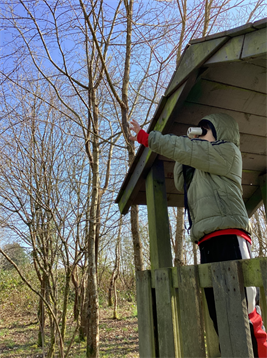
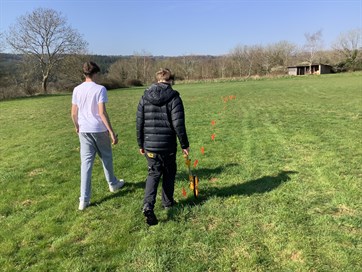
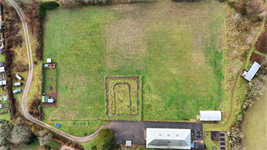
Project Compass aims to support the application of academic knowledge in a practical setting, to develop vocational skills and promote personal development. The campus is made up to 3 acres on the edge of Dartmoor National Park and is mainly comprised of outdoor learning spaces including a forest school area, a pump track, an outdoor kitchen, a polytunnel and allotment and an aviary. The school building has a range of specialist classrooms and learning spaces including a bike maintenance workshop, kitchen, computer suite, indoor gym and a workshop.
Project Compass runs the following initiatives and programmes:
Wild Passport
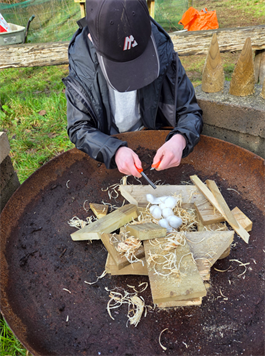
Wild Passport is a Forest School framework that is offered to KS2 students and as an intervention programme to some KS3 students.
It is comprised of five units including; rope, nature, fire, woodcraft and shelter skills and being suitable for learners aged 5+, the framework ensures an achievable content for all by scaffolding tasks through our Forest School sessions. The framework ensures and tracks progress however, is used loosely to ensure learners take control of their learning appropriately and maximise fine motor skill development, curiosity, relationships and a sense of belonging.
The Duke of Edinburgh International Award
The Duke of Edinburgh's International Award that offers Bronze, Silver and Gold Awards. The programme aims to support young people on the journey of self-development as they find their purpose, passion and place in the world. The award runs 4 sections: an expedition, a physical section, a skill section and a volunteering section.
Project Compass works in conjunction with Devon School to support students to achieve sections of their award through the skill development opportunities on offer to them and the campus is used as the centre for our expeditions.
Agriculture/Horticulture
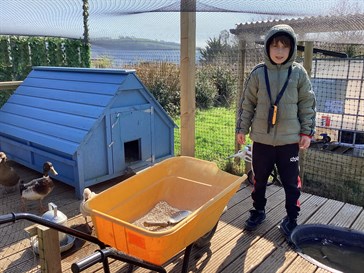
Our agriculture and horticulture offer provides students with hands on learning that boosts academic performance in science and math, improves mental and physical well-being, and encourages healthier eating habits. Students have the opportunity to help sow, grow and harvest fruit and vegetables in our school polytunnel and allotment which we then cook with in our school kitchen and sell to the local community on our school honesty stand. We also have an aviary which is home to our chickens and ducks, students are involved in the day to day care of the animals and the eggs are collected and processed and then sold at our school honesty stand.
This multidisciplinary learning improves nutritional knowledge, fosters environmental stewardship, and boosts mental well-being. It teaches students about food origins, sustainability, and essential life skills while promoting STEM careers and healthier eating habits. Key benefits include improved academic performance, increased physical activity, and developing a deeper connection to nature.
This gives students opportunity to develop skills and knowledge of key farming processes, giving them real experience of one of the leading industries in the Westcountry and supporting career pathways.
Community
Our school honesty stand has created a real community link which helps to foster a positive relationship with the local community. We take pride in selling our own produce whilst developing our social engagement with our local community. We use this as an opportunity for students to develop their entrepreneurial skills and give them real experience managing the different aspects of a business.
Catering
Our catering programme enables students to learn the fundamental skills needed to be able to prepare and make a meal for themselves. Within this, students learn how to be safe when in the kitchen in regards to Health and Safety, Food hygiene and be confident in the correct use of equipment.
Students are able to have a voice in the food that we cook for the rest of the school community at Project Compass. Students are involved in the growing and harvestings of the ingredients that we use in the kitchen. In KS4 students work towards and Level 1 and 2 Home cooking skills BTEC which gives students the knowledge, skills and experience to enjoy cooking meals at home.
Projects, Technology and Development
Our Projects, Technology and Development Curriculum (PTD) provides an engaging, holistic and adaptable curriculum designed specifically for pupils with Social, Emotional and Mental Health (SEMH) needs.
PTD at Project Compass is not delivered as isolated theory or rigid year group content. Instead, it operates through collaborative, mixed-age project work rooted in the rural and practical identity of our Buckfastleigh site. Technology is positioned as a purposeful tool that is used to solve real problems, improve our farm and enterprise projects, and develop meaningful life skills.
Through hands-on, workshop-based learning, pupils develop:
- Functional digital life skills
- Core computing literacy
- Employability and entrepreneurial awareness
- Confidence with technology
- Creativity through digital making
- Emotional regulation through purposeful achievement
The curriculum operates through fluid ability pathways rather than fixed year groups. This ensures accessibility, reduces disengagement caused by missed learning, and allows pupils to re-enter projects without stigma or disadvantage.
PTD supports and integrates with Animal Husbandry, Agriculture, Forest School and enterprise projects. Pupils learn not simply how to use technology, but how to apply it within a rural, self-sufficient and innovative environment.
Projects operate in six-week cycles, enabling pupils to see tangible outcomes from their learning. The curriculum is intentionally responsive and designed to evolve in line with pupil engagement and site development. PTD at Project Compass builds digital confidence through real-world action.
Thrive
We are proud to embed the Thrive approach across Buckfastleigh, placing wellbeing, relationships, individual needs at the heart of everything we do. Through a compassionate, holistic and responsive curriculum – enriched by the therapeutic presence of our on-site animals – we create a safe and nurturing environment where every young person feels seen, supported and empowered to grow both academically.
Education, Employment and Training (EET)
Our mission is to deliver a holistic, multidisciplinary curriculum that empowers every student to thrive in an ever-changing world. Through the integrated use of education, employment pathways, and high-quality training, we equip learners with the knowledge, skills, and confidence needed to successfully navigate the modern job market.
We are committed to ensuring students gain a deep understanding of career opportunities, labour market trends, and the expectations of employers. By providing accurate, relevant, and up-to-date information, alongside meaningful experiences and personalised guidance, we enable young people to make informed decisions about their futures.
Our approach prepares students not only for academic success but for real-world achievement—whether progressing into further education, apprenticeships, or employment. We strive to inspire ambition, develop resilience, and support every learner to make positive life choices and achieve their full potential.
Project
Our project work empowers students through meaningful, hands-on sessions that develop essential life and work-based skills, preparing them to thrive in adulthood and further education.
Through carefully planned project work across our site, we have established multiple learning structures that create purposeful environments for experiential education. These multi-use spaces enable students to engage in authentic tasks that mirror workplace expectations, promoting responsibility, problem-solving, and resilience. By embedding work-based practices into everyday learning, we support students in understanding routines, roles, and the value of collaborative effort. This teaches students about risks and hazards and safety practices. Before students have the opportunity to use and tools, they must complete a tool licence to ensure they understand the health and safety requirements of each tool. This teaches students about risks and hazards and gives opportunities for students to take calculated risks
A key example of our approach is the design and construction of functional projects such as our chicken coop and duck facilities. In building and maintaining these environments, students actively develop both gross and fine motor skills through measuring, assembling, lifting, fastening, and handling tools and materials. These projects also foster teamwork, communication, and shared accountability, as students work together toward tangible outcomes that benefit the wider school community.
By integrating project-based learning with real-life responsibilities, we aim to build capable, resilient learners who are prepared not only for further education and employment pathways but also for active, confident participation in adult life.