
Using the STEP Therapeutic Framework to Support Adam’s Progress, Independence and Family Transitions
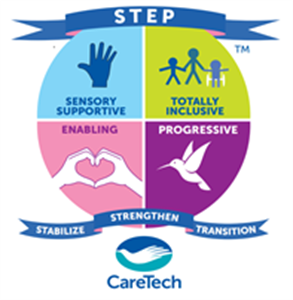
This case study demonstrates how the STEP Therapeutic Framework is supporting Adam’s emotional regulation, sensory needs, communication, learning and independence since joining The Forum School in February 2026. Through a collaborative, multidisciplinary approach, the team has helped Adam establish more consistent routines, develop new skills and build greater confidence in everyday activities. His progress is also beginning to transfer into family life, with positive changes observed during visits home.
Stabilising Phase (February 2026 – Early 2026)
The primary objective during Adam’s initial transition to Hambledon at The Forum School (TFS) on 9th February 2026 was to address critical lifestyle dysregulations, establish baseline safety, and stabilise his acute sensory and physical anxiety.
-
Upon arrival, Adam presented with highly irregular sleep patterns, frequently waking for most of the night—a behaviours that historically caused extreme distress for his parents. The therapy team, home staff, and night staff worked collaboratively to implement a structured, whole-team sleep hygiene routine. By combining targeted therapeutic input, sensory soothing strategies, and strict consistency, his sleep cycles were stabilized. While patterns remain occasionally inconsistent, this baseline intervention drastically improved his daytime readiness.
-
Adam possesses high sensory needs, previously evidenced by tactile food moulding. A comprehensive waking-day sensory program was established to proactively meet these tactile and outdoor preferences (including long walks and nature access). Providing appropriate outlets for his sensory seeking effectively lowered his baseline anxiety, ensuring he felt safe and regulated.
-
In his previous placement, Adam’s impulsive nature required the use of physical reins in public. At TFS, the team stabilized his community access by swapping restrictive equipment for highly vigilant, close adult monitoring. Staff learned his subtle triggers, allowing them to intercept impulsivity early and gently guide him to quiet spaces to de-escalate before safety risks materialized.
Strengthening Phase (Mid 2026 – Present)
Once Adam achieved emotional and physical stability, the therapeutic focus shifted to upgrading his learning environment, building functional autonomy, and strengthening his cognitive and communicative capacities.
- Historically, Adam accessed his curriculum entirely on the floor in a "low-level environment." Staff systematically challenged and strengthened his environmental tolerance by encouraging him to learn at a school desk. Adam transitioned seamlessly, showing zero adversity, and now successfully completes all educational tasks sitting at a table.
- Adam entered TFS with severe verbal deficits, often misapplying words (e.g., saying "mango" for orange) and lacking consistency with visual aids. Speech and language interventions introduced daily schedules and personalized social stories. Staff are actively strengthening his functional vocabulary, and Adam is demonstrating massive willingness, intense effort, and high motivation to verbalise new words to connect with adults.
- To target his habit of eating with his fingers, staff introduced consistent dining-table expectations alongside his peers. He is continually prompted and coached to use a knife and fork. Furthermore, general household independence has been reinforced through uniform routines, building his confidence in executing daily domestic tasks autonomously.
Transitioning Phase (Present – Future Forward)
The current focus centres on generalising Adam’s newly acquired strengths across different environments, ensuring his school progress seamlessly bridges into his family life.
- A major indicator of the STEP model’s success is the successful transfer of behaviours from the school to the family home during visits. Adam now naturally mirrors his structured school behaviours at home, choosing to sit on the sofa calmly to watch cartoons and marvel media in his free time, rather than entering a dysregulated state.
- Adam's parents have reported immense delight and "shock" during home visits, specifically noting an immediate reduction in their own caregiving distress. A landmark moment occurred when Adam independently took off his shoes and placed them directly onto the family shoe rack without prompting—demonstrating that his learned ILS routines have successfully transitioned into his long-term memory and domestic life.
- As Adam’s journey at TFS has only just begun, the multidisciplinary team is focused on maintaining this trajectory. Future transition steps include aligning home and school communication visuals perfectly, further expanding his verbal clarity, and ensuring his improving sleep hygiene routine continues to stabilize his transitions back to his parents' house.
*Name has been changed to protect identity.