
Using the STEP Therapeutic Framework to Support Bobby’s Communication, Independence and Transition Home
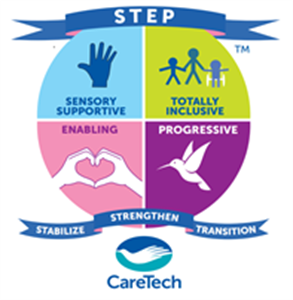
This case study demonstrates how the STEP Therapeutic Framework has supported Bobby’s sensory regulation, communication, learning and independence since joining The Forum School in February 2024. Through consistent therapeutic support and a collaborative approach, Bobby has developed his ability to engage in structured activities, communicate using augmentative and alternative communication (AAC) technology, and take part in everyday household tasks. His progress is also being supported beyond the school environment, with his family recognising the continuation of his independent living skills and tidying routines at home.
Stabilising Phase (February 2024 – Late 2024)
The primary focus of this initial phase was to regulate Bobby’s sensory system, establish a functional baseline for communication, and ensure physical well-being as he adapted to life at TFS after moving from his parents' home and a specialist day school.
Upon arrival, Bobby required significant input to manage his regulation and learning readiness. A bespoke Sensory Support Plan was implemented, incorporating targeted interventions such as messy play and therapeutic hand massages multiple times throughout the day. These strategies successfully stabilised his nervous system, allowing him to settle happily into school life.
Initially, Bobby presented with severe communication barriers, relying on a highly limited, signing system and physical pulling (e.g., leading staff to cupboards for drinks). Staff introduced Level 1 of the Picture Exchange Communication System (PECS) to replace these non-functional methods with an objective, reliable means of requesting items. Simultaneously, staff paired PECS with vocal encouragement to capture his natural motivation to communicate, turning initial letter sounds (like "ddd" for drink) into functional communication attempts.
To ensure physical discomfort did not interfere with his emotional stability, routine clinical protocols were established. This included rigorous bowel monitoring to actively manage and mitigate chronic constipation issues, ensuring his physical comfort remained stable.
Strengthening Phase (Late 2024 – Early 2025)
Once Bobby was emotionally regulated and physically stable, the therapeutic focus shifted to building his cognitive resilience, expanding his skill sets, and deepening his independence.
Bobby initially presented with a very short attention span and struggled to remain anchored to tasks. Through Intensive Interaction techniques, positive reinforcement, and preference-based motivators, staff systematically built his stamina. He progressed from minimal engagement to successfully maintaining focus on structured tasks for several consecutive minutes.
Building upon the success of the PECS framework, Bobby's communication capacity was significantly upgraded in February 2025 with the introduction of a high-tech Augmented and Alternative Communication (AAC) talker. This tool was deployed within a highly structured classroom environment to strengthen his syntax, vocabulary selection, and independent communication confidence.
Bobby underwent intensive skill-building to foster personal autonomy. With consistent staff prompting and encouragement, he mastered foundational domestic tasks, including independently placing his plate in the dishwasher, transporting his laundry to the washing machine, and participating in general household tidying.
Transitioning Phase (May 2025 – Present)
The current phase focuses on generalization—transferring the skills Bobby strengthened in the controlled school environment into his broader life, particularly his family home during holiday transitions.
A critical milestone occurred in May 2025, when his high-tech AAC talker was transitioned from the classroom into the home environment. While Bobby naturally reverts to older, lower-effort communication habits when at home, active transition protocols are in place. With structured adult support, prompting, and reinforcement, he is learning to bridge the gap and utilize his device outside the school setting.
Because Bobby is on a 38-week placement, he transitions back to his parents' house for every school holiday. The success of the STEP model is highlighted by the fact that his parents have actively recognized and reported the continuation of his independent living skills and tidying routines within the family home.
The multidisciplinary team continues to collaborate closely with Bobby's family to steadily fade out prompts, increase his spontaneous use of the AAC device at home, and expand his focus times, ensuring a seamless, continuous circle of care between TFS and home.
*Name has been changed to protect identity.